Homemade Cultured Butter: The Secret to the Best Bread and Butter You’ll Ever Eat
If you have never tried Cultured Butter, you are in for a revelation. Unlike standard store-bought butter, cultured butter is fermented with live active cultures before it is churned. This results in a deeper, tangier, and almost “nutty” flavor profile that elevates a simple slice of sourdough into a gourmet experience. It is the gold standard of European-style butters, and it is surprisingly easy to make in your own kitchen.
The beauty of making your own butter is the control you have over the fermentation and the salt quality. In this guide, I’ll show you how to transform a quart of heavy cream into a rich, probiotic-rich spread and a jar of authentic, tangy buttermilk as a bonus.
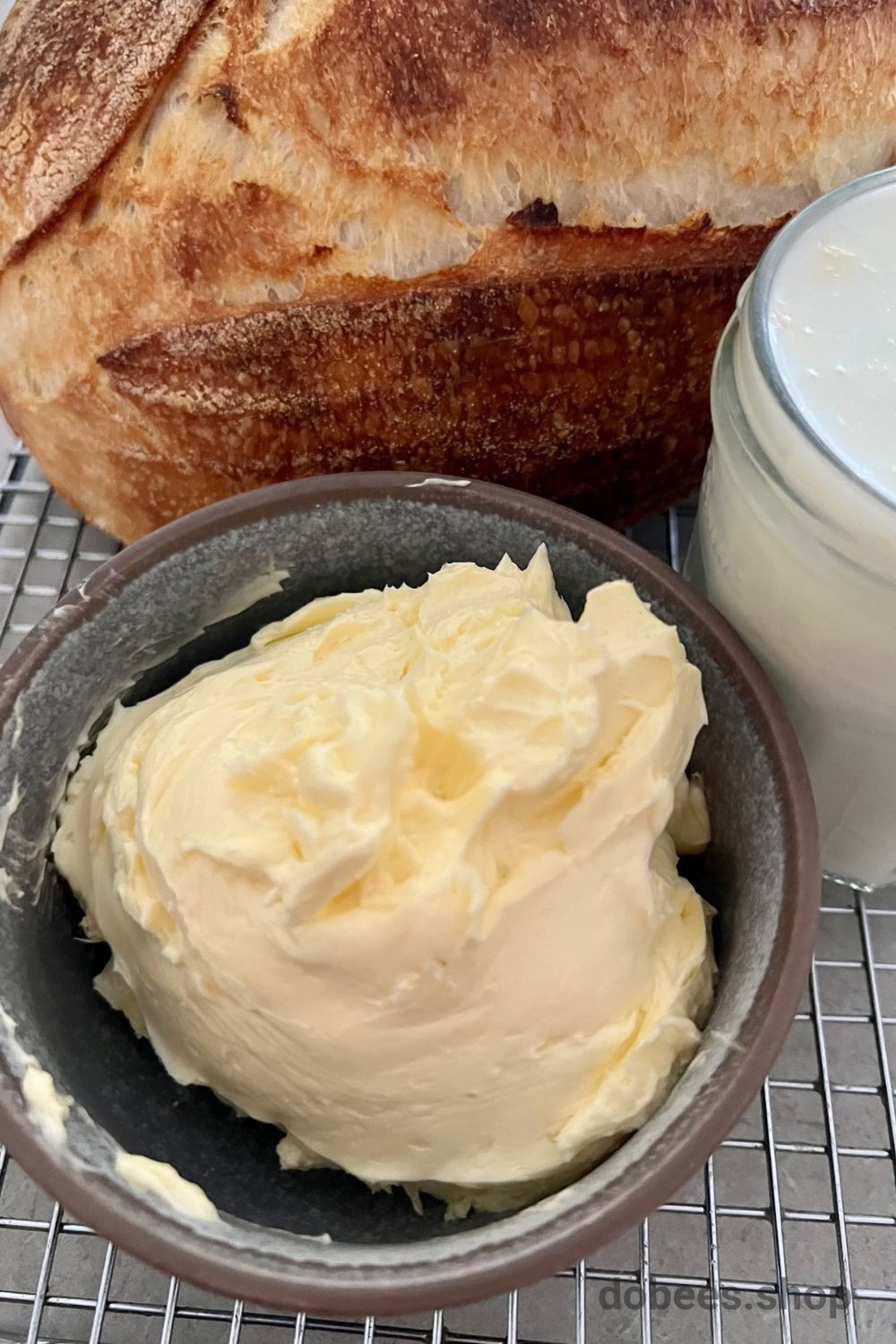
The Essentials
Because this is a fermented product, the quality of your dairy is the most important factor. Always check the labels!
- The Cream: 1 Quart of Heavy Cream. Avoid “Ultra-Pasteurized” (UHT) if possible; the high heat used in UHT treatment can make it difficult for the cultures to thrive and for the butter to break.
- The Culture: 2 tablespoons of plain yogurt with “Live Active Cultures,” or real cultured buttermilk.
- The Finish: High-quality flaky sea salt (Maldon or a smoked salt works beautifully).
- The Wash: A large bowl of icy cold water.
For the best tang, keep your cream in a warm spot (around 70°F–75°F) while it ferments. If your kitchen is too cold, the cream won’t thicken; if it’s too hot, it can develop “off” flavors. A cupboard above the fridge is often the perfect “sweet spot” for a 24-hour ferment.
Step-by-Step: From Cream to Butter
- The Culture: Stir your yogurt or buttermilk into the heavy cream in a clean glass jar. Cover with a breathable cloth or paper towel secured with a rubber band.
- The Wait: Let it sit at room temperature for 24 to 48 hours. You’ll know it’s ready when the cream has thickened to the consistency of a soft custard and smells pleasantly tangy (like crème fraîche).
- The Break: Chill the fermented cream in the fridge for an hour, then pour it into a stand mixer. Whisk on medium-high. First, you’ll get whipped cream; then, the cream will look grainy; finally, it will “break” into solid yellow clumps and a thin liquid.
- The Liquid Gold: Drain the liquid into a jar. This is authentic buttermilk! It is amazing for pancakes, biscuits, or fried chicken marinades.
- The Wash (Crucial Step): Place the butter solids in a bowl of icy water. Use a spatula to fold and squeeze the butter. The water will turn cloudy. Drain and repeat with fresh icy water until the water stays perfectly clear. If you leave any buttermilk trapped in the butter, it will go sour within days.
- The Salt: Once washed, knead in your sea salt and any herbs you like. Wrap in parchment paper and store in the fridge.
Why We Love Cultured Butter
Beyond the incredible flavor, cultured butter is easier to digest because the fermentation process breaks down much of the lactose. It’s rich in healthy fats and butyrate, which supports gut health. When paired with a slow-fermented sourdough, it creates a satisfying, low-glycemic breakfast that provides steady energy without the mid-morning sugar crash.
Final Thoughts
Making your own butter is a deeply satisfying kitchen ritual. It turns a basic staple into a craft. Whether you’re serving it at a fancy brunch or just spreading it on your morning toast, the effort you put into the “slow-churn” method is something you can taste in every bite. Once you’ve had homemade cultured butter, it’s very hard to go back to the store-bought sticks!
Have you ever tried adding honey or roasted garlic to your homemade butter? Tell me your favorite flavor infusions in the comments!