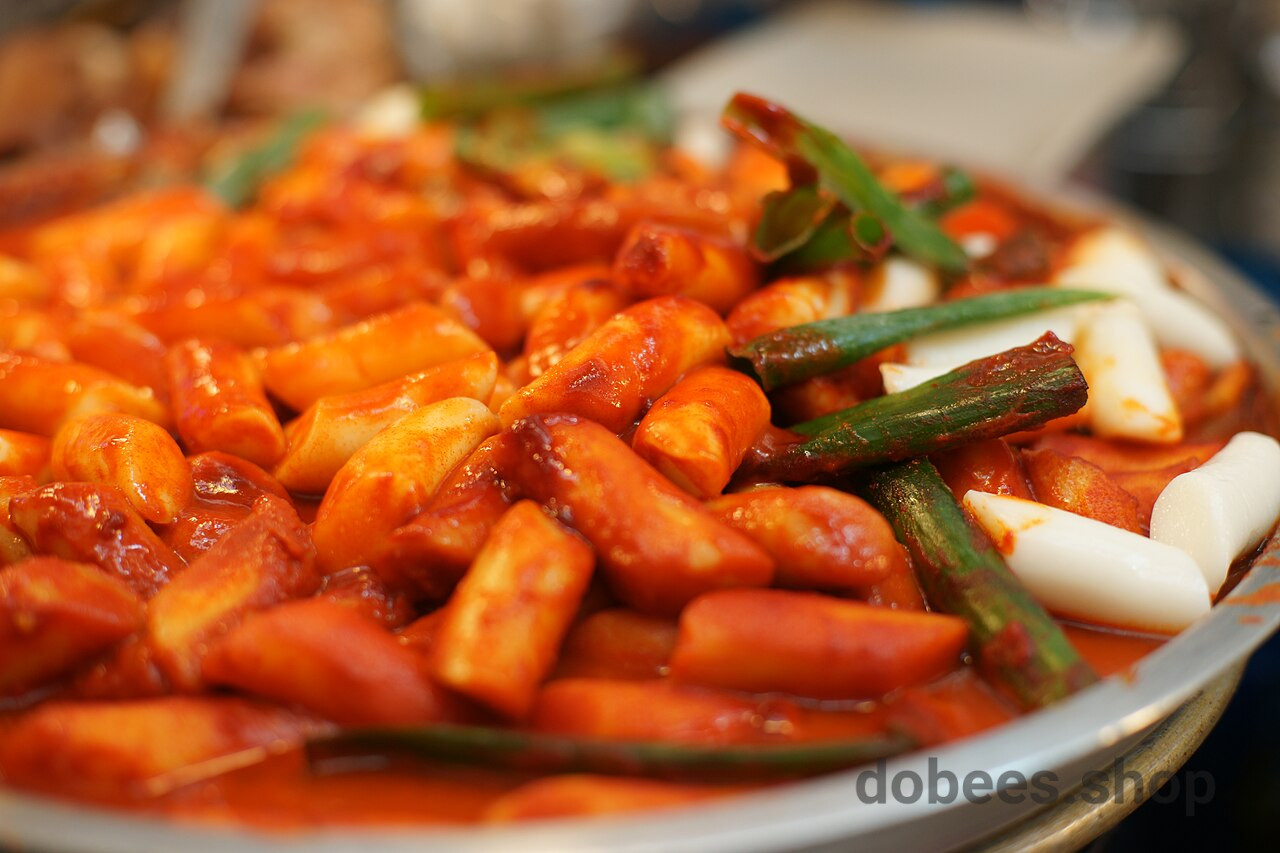
The Soul of Korean Street Food
Tteokbokki (pronounced tok-bo-kee) is more than just a dish; it is a cultural phenomenon. Originating as a savory, soy-based royal court dish (Gungjung Tteokbokki), it evolved in the post-war 1950s into the spicy, gochujang-laden version beloved today. The star of the show is the Garae-tteok long, cylindrical rice cakes that provide a uniquely chewy, “QQ” texture that has captivated foodies globally in 2026. Whether served in a simple paper cup on a Seoul street corner or elevated with truffle oil in a Manhattan bistro, Tteokbokki remains the ultimate comfort food.
Essential Ingredients for 2026
To achieve the authentic “red and glossy” look that trends on 2026 social media feeds, quality ingredients are non-negotiable. While traditional recipes rely heavily on dried anchovy broth, the 2026 version often incorporates umami-rich vegetable stocks or dashi to cater to a more flexible, plant-leaning audience.
- Korean Rice Cakes (Garae-tteok): Fresh is best, but vacuum-sealed options work well if soaked first.
- Gochujang (Korean Chili Paste): The fermented base that provides depth and heat.
- Gochugaru (Chili Flakes): For that vibrant red color without making it overly thick.
- Fish Cakes (Eomuk): Adds a salty, savory contrast to the sweet rice cakes.
- 2026 Twist: A splash of oat milk or a spoonful of miso paste for a creamier, modern fusion profile.
Step-by-Step Preparation Guide
- Prepare the Base: Bring 3 cups of broth (anchovy or kelp) to a boil in a shallow pan. This wide surface area helps the sauce reduce evenly.
- Make the “Power” Sauce: In a small bowl, whisk together 2 tbsp Gochujang, 1 tbsp Gochugaru, 1 tbsp soy sauce, and 1 tbsp sugar (or honey for a 2026 natural alternative).
- Simmer: Add the sauce to the boiling broth and stir. Add the rice cakes and sliced fish cakes.
- The Reduction: Let it simmer for 8–10 minutes. The starch from the rice cakes will naturally thicken the sauce into a rich, velvety glaze.
- The Finish: Toss in some sliced white cabbage and scallions in the last 2 minutes for a fresh crunch.
2026 Trends: The “Carbonara” and “Rose” Variations
In early 2026, the “Rose Tteokbokki” has become a staple in Western kitchens. By adding heavy cream or a plant-based cream alternative to the spicy base, the heat is mellowed into a luxurious, pink sauce that appeals to those who find traditional Gochujang too intense. Another 2026 favorite is “Crunchy Tteokbokki,” where the rice cakes are air-fried before being tossed in sauce, hitting the major 2026 trend of “sensory contrast” in snackable portions.
Nutrition and Functionality
In line with 2026 health trends, home cooks are “boosting” their Tteokbokki with functional add-ons. Adding boiled eggs or grilled tempeh increases the protein density, while a side of kimchi provides the probiotics that 2026 consumers crave for gut health. While high in carbohydrates, Tteokbokki is increasingly viewed as a high-energy “pre-workout” or “recovery” meal for active individuals looking for a flavorful alternative to bland pasta.
Conclusion
Tteokbokki in 2026 is the perfect example of how traditional food can evolve without losing its soul. It is adaptable, visually stunning, and hits every flavor note from sweet and salty to spicy and umami. Whether you are sticking to the classic street-style recipe or experimenting with 2026’s cream-based fusions, the secret remains the same: it’s all about that perfect, chewy bite. So, grab your Gochujang and start simmering how easy is that?